

Iceberg in your backyard?
Today, we talk about ice literally breaking!

Hi folks!
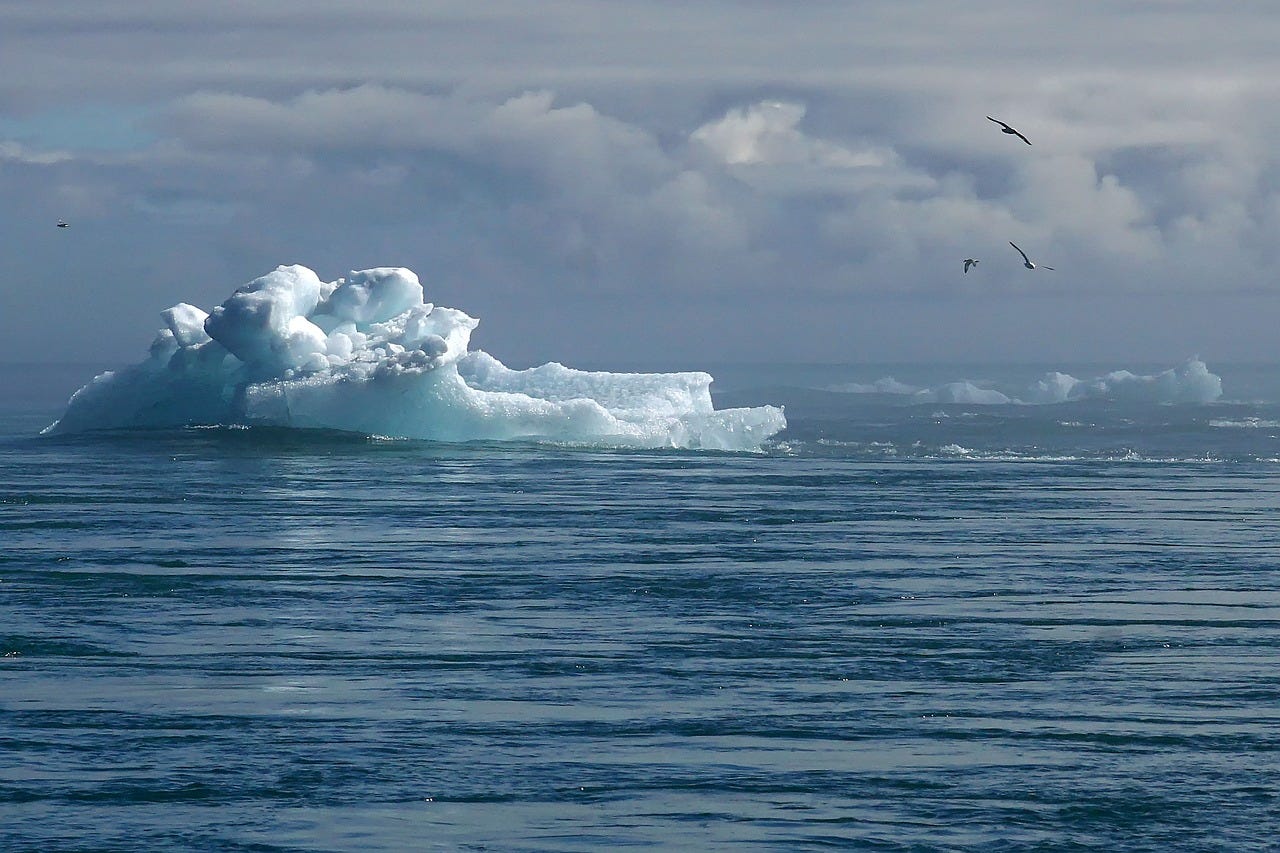
Did you come across this viral video of an iceberg floating near the shores of Canada?
The colossal chunk of ice shrouded in fog seems like something right out of a frame of Game of Thrones. In fact, one Instagram user shared another video of the iceberg which features a boat -- a testament to just how massive the iceberg was.
While the video has gone viral recently, the iceberg was seen near Conche, a town in Canada's Newfoundland and Labrador province in early July. A Facebook group, where enthusiasts track and post photographs of icebergs in the area, has a video dating back to June 30 of a giant iceberg in Conche.
So this isn't unusual? Not really! There's a whole tourism industry dedicated to iceberg watching. The activity isn't easy, because most of the icebergs, floating down from the Greenland glacier, are foundering (read: melting and sinking) by the time they reach the Newfoundland shores. Depending on the size, winds and ocean currents, an iceberg someone saw today, may be gone tomorrow!

Here's a map The Conversation put out a year back on the track icebergs take from Greenland to the 'Iceberg alley' -- coined to refer to a stretch of water along the shores of Newfoundland and Labrador, where icebergs frequent.
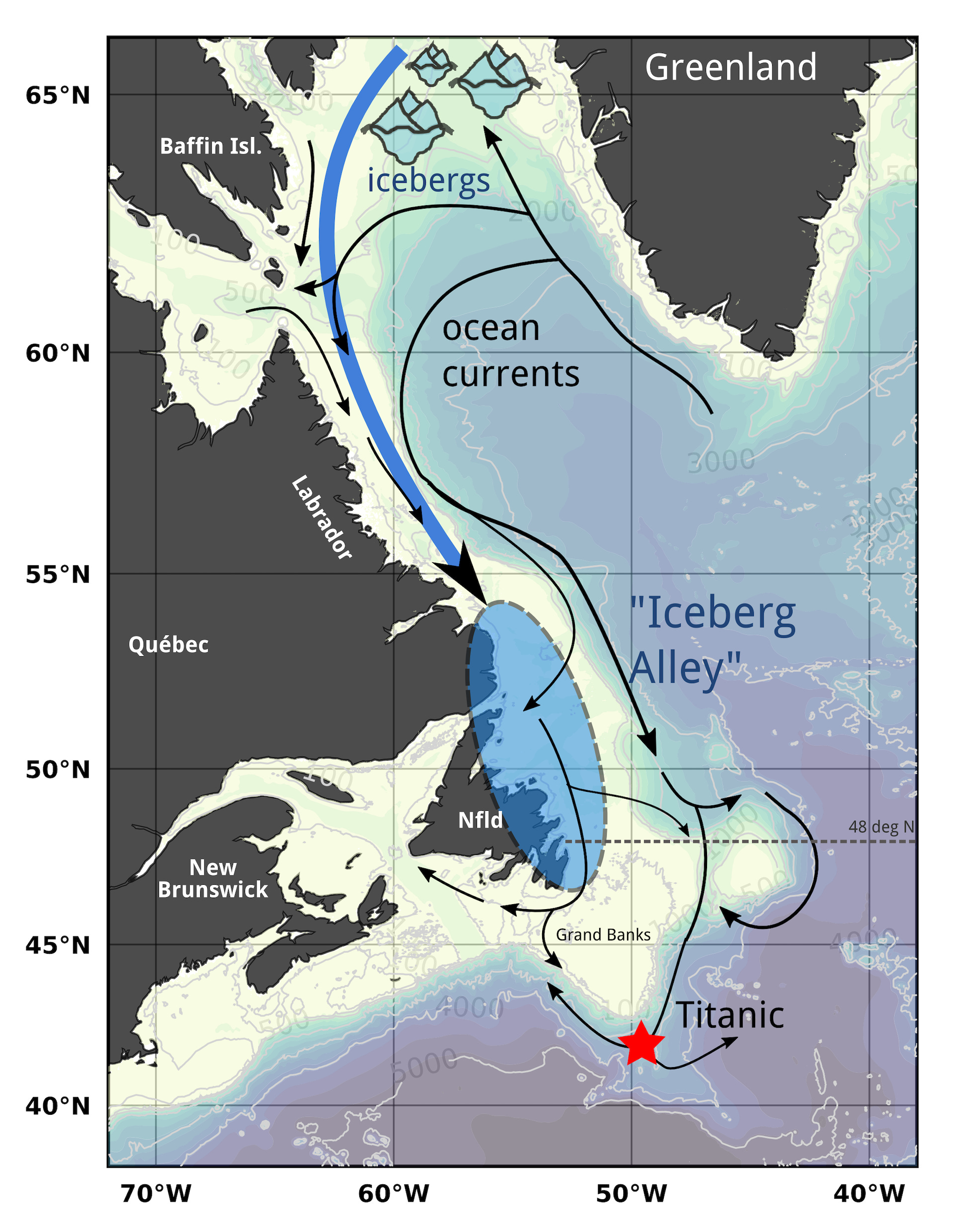
🛳️ Fun fact: Did you notice the map marks where the Titanic sank? Though far away from Conche (over 1,100 km if measured in a straight line), the Titanic too hit an iceberg which floated down from Greenland near Newfoundland. The Jakobshavn Glacier of Greenland, from where the iceberg is thought to have calved, was once the fastest-shedding and thinning glacier in Greenland. Interestingly, in recent years, scientists have discovered that the glacier is growing thicker.
But it's not good news! Here's why:
New research has shown that over 400,000 years ago, when global temperatures were not much higher than today's, much of Greenland's ice had melted. According to New Scientist, "The findings show that even if the planet doesn’t get any warmer than it is now, ice loss from Greenland alone would add at least 1.5 metres to the global average sea level and possibly as much as 5 metres." This can have massive financial and humanitarian costs, especially for coastal populations.
Things aren't too bright in the southern hemisphere either. The New York Times reported that despite winter time when ice forms around Antarctica, this year the growth has hit a record low. With less ice, more of the ice sheet would be exposed to the ocean, causing it to break more easily, and raise sea levels, the report flags.
Lastly, I will leave you with an interesting explainer on why the colour of our oceans is changing. Climate change has made our oceans more stratified. That is, warmer water on the top has become... well, even warmer, absorbing less carbon dioxide and oxygen. This makes it unsuitable for marine life and the growth of phytoplanktons -- which cause the water to appear green.
That's all for today! Until next time,
Sonal